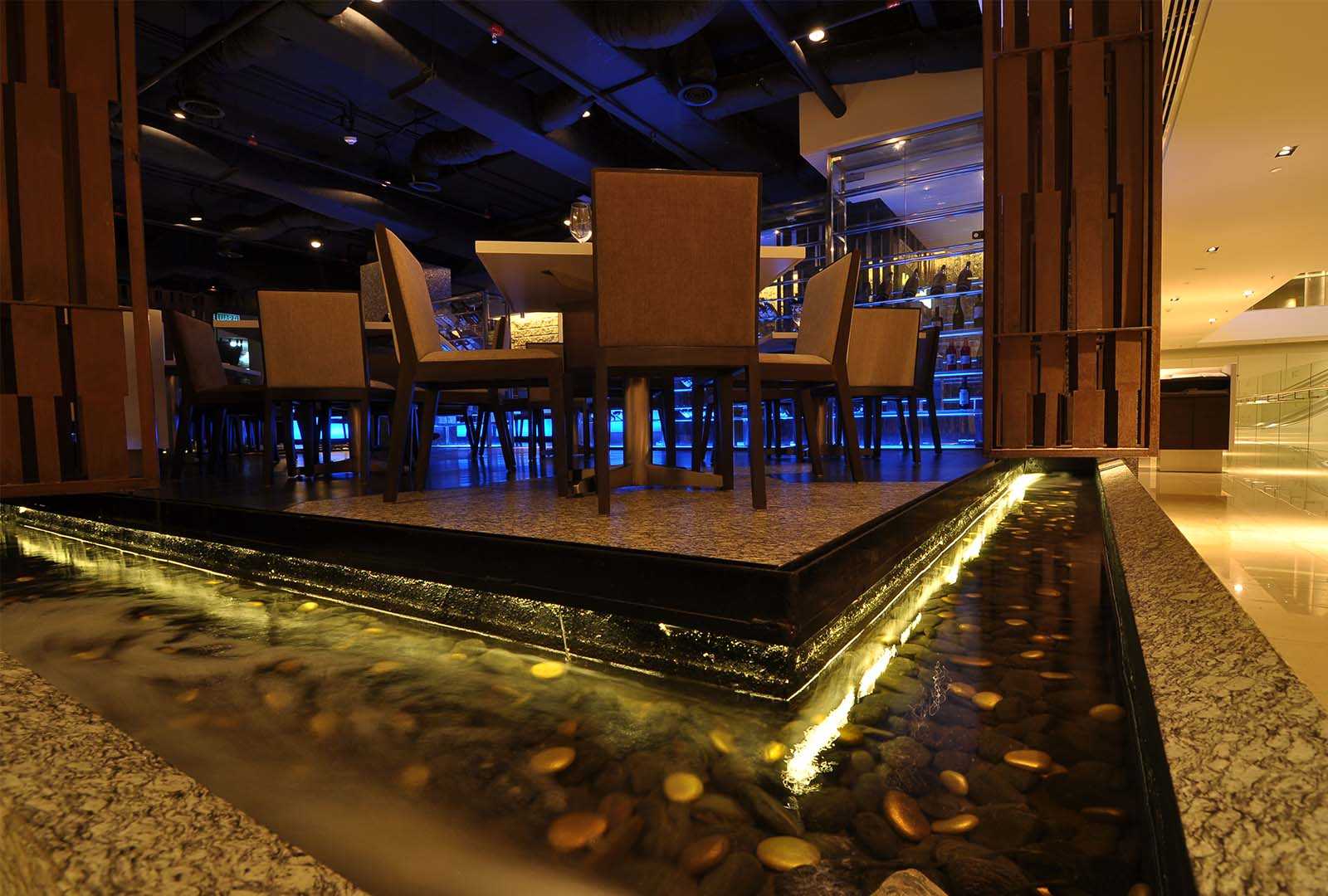
Kin No Mizu draws inspiration from the mystery of a cave, layered spaces, dark tones, and flickers of light evoking depth and discovery. A rusted steel façade folds open like a cavern’s mouth, leading guests across a glass floor over water into intimate dining zones that progress deeper toward the source pool. Lighting filters through recesses like shafts of sunlight, while blue-lit counters and glass wine displays heighten anticipation. Each space offers a distinct sensory atmosphere; from open, social areas to secluded grottoes, turning dining into an evocative journey of exploration, intrigue, and culinary adventure.
Thus the dining experience becomes a journey of culinary discovery in an atmosphere of spelunking adventure.
Kin No Mizu draws inspiration from the mystery of a cave, layered spaces, dark tones, and flickers of light evoking depth and discovery. A rusted steel façade folds open like a cavern’s mouth, leading guests across a glass floor over water into intimate dining zones that progress deeper toward the source pool. Lighting filters through recesses like shafts of sunlight, while blue-lit counters and glass wine displays heighten anticipation. Each space offers a distinct sensory atmosphere; from open, social areas to secluded grottoes, turning dining into an evocative journey of exploration, intrigue, and culinary adventure.
Thus the dining experience becomes a journey of culinary discovery in an atmosphere of spelunking adventure.
Kin No Mizu draws inspiration from the mystery of a cave, layered spaces, dark tones, and flickers of light evoking depth and discovery. A rusted steel façade folds open like a cavern’s mouth, leading guests across a glass floor over water into intimate dining zones that progress deeper toward the source pool. Lighting filters through recesses like shafts of sunlight, while blue-lit counters and glass wine displays heighten anticipation. Each space offers a distinct sensory atmosphere; from open, social areas to secluded grottoes, turning dining into an evocative journey of exploration, intrigue, and culinary adventure.
Thus the dining experience becomes a journey of culinary discovery in an atmosphere of spelunking adventure.
Kin No Mizu draws inspiration from the mystery of a cave, layered spaces, dark tones, and flickers of light evoking depth and discovery. A rusted steel façade folds open like a cavern’s mouth, leading guests across a glass floor over water into intimate dining zones that progress deeper toward the source pool. Lighting filters through recesses like shafts of sunlight, while blue-lit counters and glass wine displays heighten anticipation. Each space offers a distinct sensory atmosphere; from open, social areas to secluded grottoes, turning dining into an evocative journey of exploration, intrigue, and culinary adventure.
Thus the dining experience becomes a journey of culinary discovery in an atmosphere of spelunking adventure.
Kin No Mizu draws inspiration from the mystery of a cave, layered spaces, dark tones, and flickers of light evoking depth and discovery. A rusted steel façade folds open like a cavern’s mouth, leading guests across a glass floor over water into intimate dining zones that progress deeper toward the source pool. Lighting filters through recesses like shafts of sunlight, while blue-lit counters and glass wine displays heighten anticipation. Each space offers a distinct sensory atmosphere; from open, social areas to secluded grottoes, turning dining into an evocative journey of exploration, intrigue, and culinary adventure.
Thus the dining experience becomes a journey of culinary discovery in an atmosphere of spelunking adventure.
Kin No Mizu draws inspiration from the mystery of a cave, layered spaces, dark tones, and flickers of light evoking depth and discovery. A rusted steel façade folds open like a cavern’s mouth, leading guests across a glass floor over water into intimate dining zones that progress deeper toward the source pool. Lighting filters through recesses like shafts of sunlight, while blue-lit counters and glass wine displays heighten anticipation. Each space offers a distinct sensory atmosphere; from open, social areas to secluded grottoes, turning dining into an evocative journey of exploration, intrigue, and culinary adventure.
Thus the dining experience becomes a journey of culinary discovery in an atmosphere of spelunking adventure.
Kin No Mizu draws inspiration from the mystery of a cave, layered spaces, dark tones, and flickers of light evoking depth and discovery. A rusted steel façade folds open like a cavern’s mouth, leading guests across a glass floor over water into intimate dining zones that progress deeper toward the source pool. Lighting filters through recesses like shafts of sunlight, while blue-lit counters and glass wine displays heighten anticipation. Each space offers a distinct sensory atmosphere; from open, social areas to secluded grottoes, turning dining into an evocative journey of exploration, intrigue, and culinary adventure.
Thus the dining experience becomes a journey of culinary discovery in an atmosphere of spelunking adventure.
Kin No Mizu draws inspiration from the mystery of a cave, layered spaces, dark tones, and flickers of light evoking depth and discovery. A rusted steel façade folds open like a cavern’s mouth, leading guests across a glass floor over water into intimate dining zones that progress deeper toward the source pool. Lighting filters through recesses like shafts of sunlight, while blue-lit counters and glass wine displays heighten anticipation. Each space offers a distinct sensory atmosphere; from open, social areas to secluded grottoes, turning dining into an evocative journey of exploration, intrigue, and culinary adventure.
Thus the dining experience becomes a journey of culinary discovery in an atmosphere of spelunking adventure.
Kin No Mizu draws inspiration from the mystery of a cave, layered spaces, dark tones, and flickers of light evoking depth and discovery. A rusted steel façade folds open like a cavern’s mouth, leading guests across a glass floor over water into intimate dining zones that progress deeper toward the source pool. Lighting filters through recesses like shafts of sunlight, while blue-lit counters and glass wine displays heighten anticipation. Each space offers a distinct sensory atmosphere; from open, social areas to secluded grottoes, turning dining into an evocative journey of exploration, intrigue, and culinary adventure.
Thus the dining experience becomes a journey of culinary discovery in an atmosphere of spelunking adventure.
Kin No Mizu draws inspiration from the mystery of a cave, layered spaces, dark tones, and flickers of light evoking depth and discovery. A rusted steel façade folds open like a cavern’s mouth, leading guests across a glass floor over water into intimate dining zones that progress deeper toward the source pool. Lighting filters through recesses like shafts of sunlight, while blue-lit counters and glass wine displays heighten anticipation. Each space offers a distinct sensory atmosphere; from open, social areas to secluded grottoes, turning dining into an evocative journey of exploration, intrigue, and culinary adventure.
Thus the dining experience becomes a journey of culinary discovery in an atmosphere of spelunking adventure.
Kin No Mizu draws inspiration from the mystery of a cave, layered spaces, dark tones, and flickers of light evoking depth and discovery. A rusted steel façade folds open like a cavern’s mouth, leading guests across a glass floor over water into intimate dining zones that progress deeper toward the source pool. Lighting filters through recesses like shafts of sunlight, while blue-lit counters and glass wine displays heighten anticipation. Each space offers a distinct sensory atmosphere; from open, social areas to secluded grottoes, turning dining into an evocative journey of exploration, intrigue, and culinary adventure.
Thus the dining experience becomes a journey of culinary discovery in an atmosphere of spelunking adventure.
Kin No Mizu draws inspiration from the mystery of a cave, layered spaces, dark tones, and flickers of light evoking depth and discovery. A rusted steel façade folds open like a cavern’s mouth, leading guests across a glass floor over water into intimate dining zones that progress deeper toward the source pool. Lighting filters through recesses like shafts of sunlight, while blue-lit counters and glass wine displays heighten anticipation. Each space offers a distinct sensory atmosphere; from open, social areas to secluded grottoes, turning dining into an evocative journey of exploration, intrigue, and culinary adventure.
Thus the dining experience becomes a journey of culinary discovery in an atmosphere of spelunking adventure.
Kin No Mizu draws inspiration from the mystery of a cave, layered spaces, dark tones, and flickers of light evoking depth and discovery. A rusted steel façade folds open like a cavern’s mouth, leading guests across a glass floor over water into intimate dining zones that progress deeper toward the source pool. Lighting filters through recesses like shafts of sunlight, while blue-lit counters and glass wine displays heighten anticipation. Each space offers a distinct sensory atmosphere; from open, social areas to secluded grottoes, turning dining into an evocative journey of exploration, intrigue, and culinary adventure.
Thus the dining experience becomes a journey of culinary discovery in an atmosphere of spelunking adventure.